

Low Back Pain Physiotherapy
Low back pain?
Understand the cause.
Low back pain can affect your work, sleep, walking and everyday movement. We start with a detailed assessment to understand your problem.
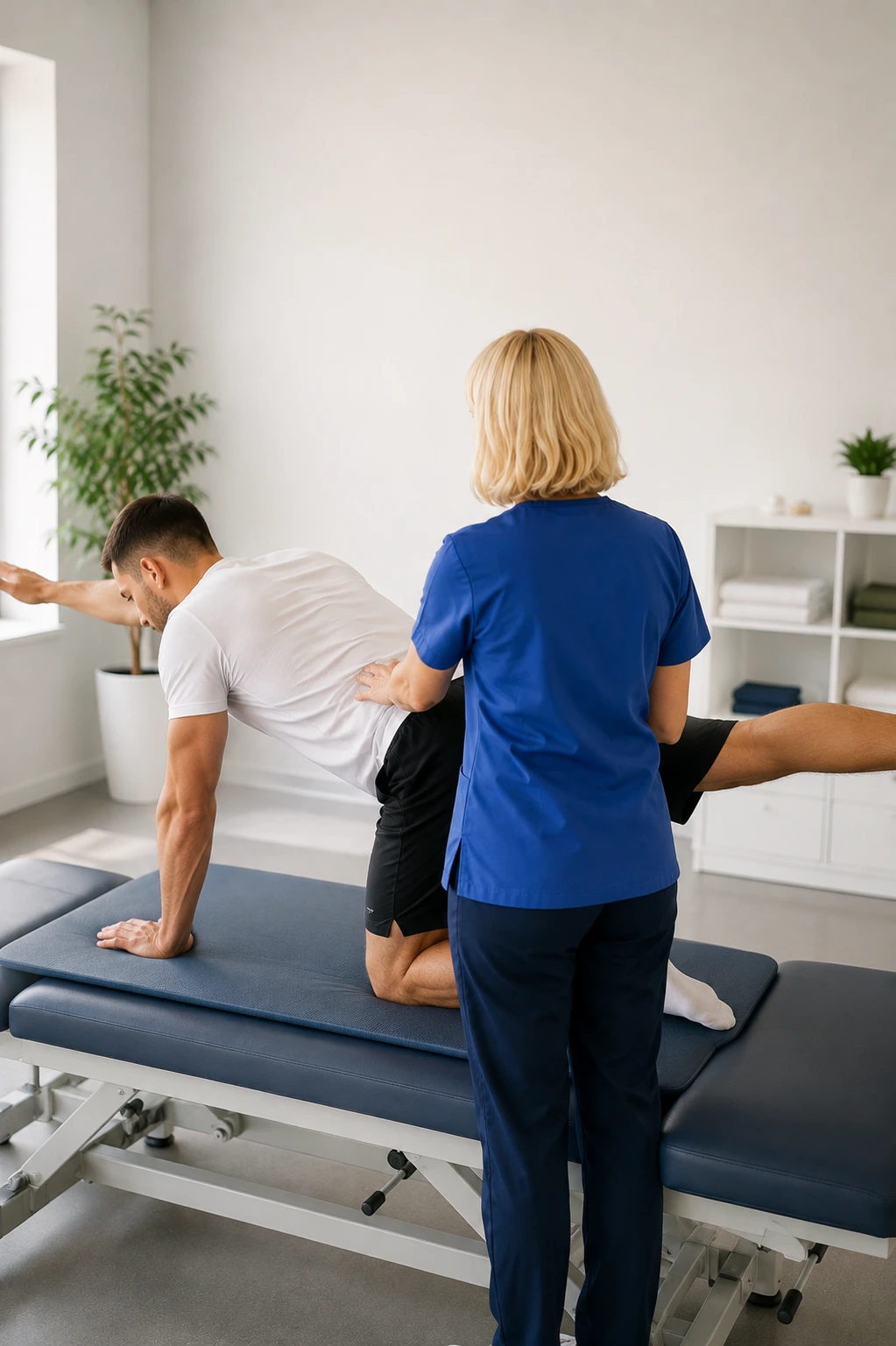
What is it?
Pain may stay in the lower back or travel down the leg
Low back pain is pain or tension in the lower part of the back. It may be mild or severe, constant, or appear only during certain movements.
For some people, the pain stays in the lower back. For others, it may spread into the buttock or leg and may be accompanied by numbness or tingling.
Common symptoms
How is the pain limiting you?
Low back pain may appear during movement, while sitting, or even after resting.
When sitting
Pain or tension after sitting for a long time.
When standing up
Stiffness or difficulty when getting up from bed or a chair.
When bending
Pain when bending or lifting something.
Pain down the leg
Pain that spreads into the buttock or one leg.
Numbness or tingling
Numbness, tingling or a burning sensation in the leg.
Recurring pain
Pain that improves temporarily and then returns.
Causes
Not every case of low back pain is a herniated disc
Pain may be related to the muscles, the way you move, your position at work, your activity level or problems involving a spinal disc. This is why assessment is the first step.
Prolonged sitting
An unsuitable working position
Reduced strength of the stabilizing muscles
Not enough movement during the day
Physical load or repetitive movements
Herniated disc or other disc-related problems
Sitting
Why does your lower back hurt when you sit?
When you stay in the same position for a long time, the muscles can become fatigued and the load on the lower back may increase.
Treatment should not focus only on the pain, but also on how you sit, move and organize your day.
Treatment at Treka Fizio
How is low back pain treated?
Treatment is tailored to the possible cause, your symptoms and how the pain affects your everyday life.
Assessment
We assess your pain, movement, strength and any symptoms that may travel down the leg.
Manual therapy
We work to reduce tension and improve mobility.
Exercise
We work on strength, control and stability of the trunk.
Return to activity
We help you gradually return to work, walking and physical activity.
Non-surgical treatment
In many cases, physiotherapy is the first step
Many low back problems can be managed without surgery, particularly when they are related to muscles, movement, posture or disc problems that do not require an operation.
If the assessment identifies signs that require further medical evaluation, we will recommend that you see an appropriate specialist.
Why Treka Fizio?
We do not treat only the symptom
We focus on the factors contributing to your pain, how your body moves and the habits that may be keeping symptoms active. Your plan is adapted to your condition and goals.
Learn more about usDetailed assessment
Individual treatment
Manual therapy and exercise
Advice for everyday movement
Home exercise program
When should you seek help?
Do not wait for pain to limit you further
Book an appointment if the pain keeps returning, travels down the leg, is accompanied by numbness, or interferes with work, sleep or everyday activities.
Book an AppointmentWe start by understanding your pain and what may be contributing to it.
Individual treatment me fizioterapistin.
Move with greater confidence in everyday activities.
Frequently asked questions
Questions about low back pain
Is it normal to have low back pain every morning? +
If the pain returns every morning, it may be related to stiffness, sleeping position, muscles or disc-related problems. An assessment can help identify what may be contributing to it.
Should I rest completely? +
Not always. A short period of rest may help during an acute episode, but staying inactive for too long may make the problem worse.
How many sessions will I need? +
It depends on the cause, how long you have had the pain and how you respond to treatment. Your plan is determined after the initial assessment.
Can physiotherapy help with a herniated disc? +
Yes. In many cases, physiotherapy can help reduce pain, improve movement and support a gradual return to activity. Each case should be assessed individually.