

Jaw Pain & TMJ Physiotherapy
Jaw pain or TMJ problems?
Move more comfortably.
Jaw pain, clicking or locking can affect chewing, speaking, sleep and everyday activities. We begin with a detailed assessment to understand what may be contributing to your symptoms.
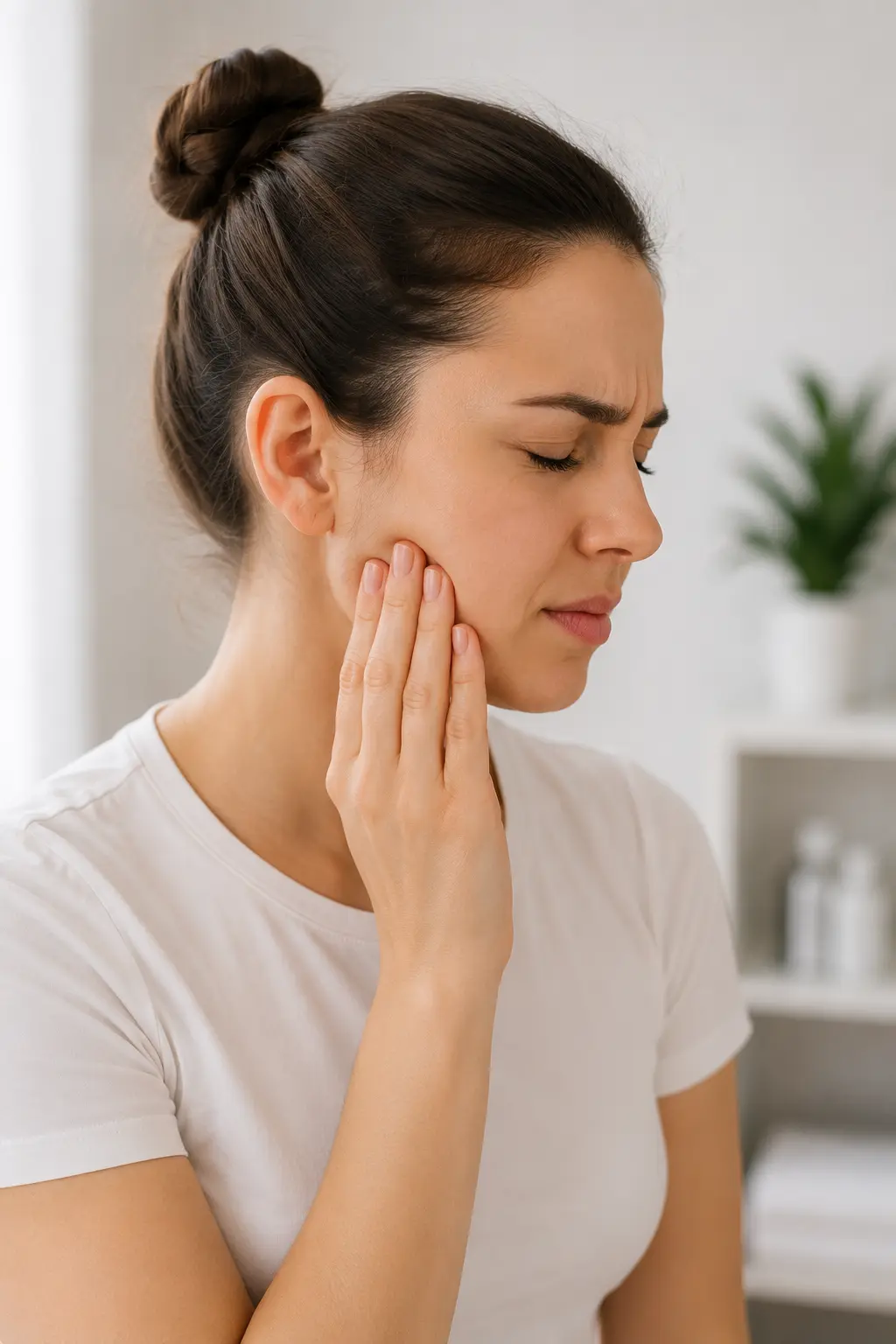
What is TMJ?
The joint you use whenever you speak, chew or open your mouth
TMJ stands for the temporomandibular joint, the joint that connects your jaw to your skull. It is used when speaking, chewing, swallowing and opening your mouth.
When the joint or the muscles that control it are not working well, symptoms may include pain, clicking, locking or restricted movement.
Common symptoms
How can the problem affect you?
Symptoms may be felt directly in the jaw or may also affect the face, ear area, head and neck.
Clicking
Clicking or popping when opening and closing your mouth.
Jaw pain
Local pain or tenderness around the joint.
Pain while chewing
Discomfort while eating or chewing harder foods.
Locking
A feeling that the jaw locks or does not open normally.
Headache
Headache që lidhet me tensionin e nofullës dhe qafës.
Neck tension
Stiffness or tension in the neck, shoulders and face.
Possible causes
There is often more than one contributing factor
Jaw problems may be associated with muscle tension, stress, everyday habits, neck position or the way the joint moves.
Clenching or grinding your teeth
Stress and muscle tension
Head and neck position
Problems involving the chewing muscles
Frequently chewing on one side
Trauma or impact to the jaw area
Jaw, neck and head
The jaw does not work in isolation
The jaw muscles work closely with the neck, face and surrounding muscles. For this reason, a jaw problem may be accompanied by neck tension or headaches.
The assessment does not focus only on the joint, but also considers posture, neck movement and how the surrounding muscles are working.
When should you seek help?
Do not ignore symptoms that keep returning
You have pain while chewing
Your jaw locks or does not open freely
Clickingt shoqërohen me dhimbje
You have frequent headaches
You feel persistent neck tension
The problem is affecting your daily life
Treatment at Treka Fizio
How are jaw and TMJ problems treated?
Treatment is tailored to your symptoms, jaw movement, muscle tension and any associated neck involvement.
Assessment
We assess mouth opening, jaw movement, pain, muscle function and neck position.
Manual therapy
We work with the muscles of the jaw, face and neck to help reduce tension and pain.
Specific exercises
We use controlled exercises for opening, closing and improving jaw movement control.
Everyday habits
We help you identify and change habits that may be contributing to tension in the jaw and surrounding muscles.
Physiotherapist and dentist
When might a dental assessment also be needed?
Not every jaw problem has the same cause. In some cases, an assessment by a dentist or another appropriate specialist may also be needed.
If the assessment identifies signs related to the bite, teeth or other dental structures, we recommend further evaluation by the appropriate professional.
Why Treka Fizio?
Treatment that looks beyond the jaw
We assess jaw function, muscles, the neck, posture and habits that may be contributing to your symptoms. Treatment is tailored to each patient’s individual needs.
Learn more about usDetailed assessment i nofullës
Neck and posture assessment
Manual therapy e përshtatur
Specific exercises për TMJ
Collaboration with a dentist when needed
First step
Do not wait for pain or locking to get worse
Book an appointment if you have pain while chewing, painful clicking, jaw locking or persistent tension in the face and neck.
Book an AppointmentWe assess the jaw, muscles, neck and your symptoms.
Individual care with your physiotherapist.
More comfortable movement and chewing.
Frequently asked questions
Questions about jaw and TMJ problems
Is jaw clicking normal? +
Clickingt pa dhimbje nuk tregojnë domosdoshmërisht një problem serioz. Nëse shoqërohen me dhimbje, bllokim ose kufizim të lëvizjes, duhet të vlerësohen.
Can physiotherapy help with TMJ problems? +
In many cases, physiotherapy can help reduce muscle tension, improve movement and manage pain.
Can headaches be related to the jaw? +
Yes. Tension in the jaw muscles and its relationship with the neck may contribute to some types of headache.
Should I see a dentist or a physiotherapist? +
It depends on the problem. A physiotherapist assesses function, muscles and movement. When a dental assessment is needed, we recommend seeing a dentist as well.
How many sessions will I need? +
The number of sessions depends on your symptoms, how long the problem has been present, movement limitations and your response to treatment.