

Herniated Disc Treatment
Herniated disc?
Understand the problem.
A herniated disc does not always mean surgery. We begin with a detailed assessment to understand your symptoms and determine the most appropriate treatment approach for you.
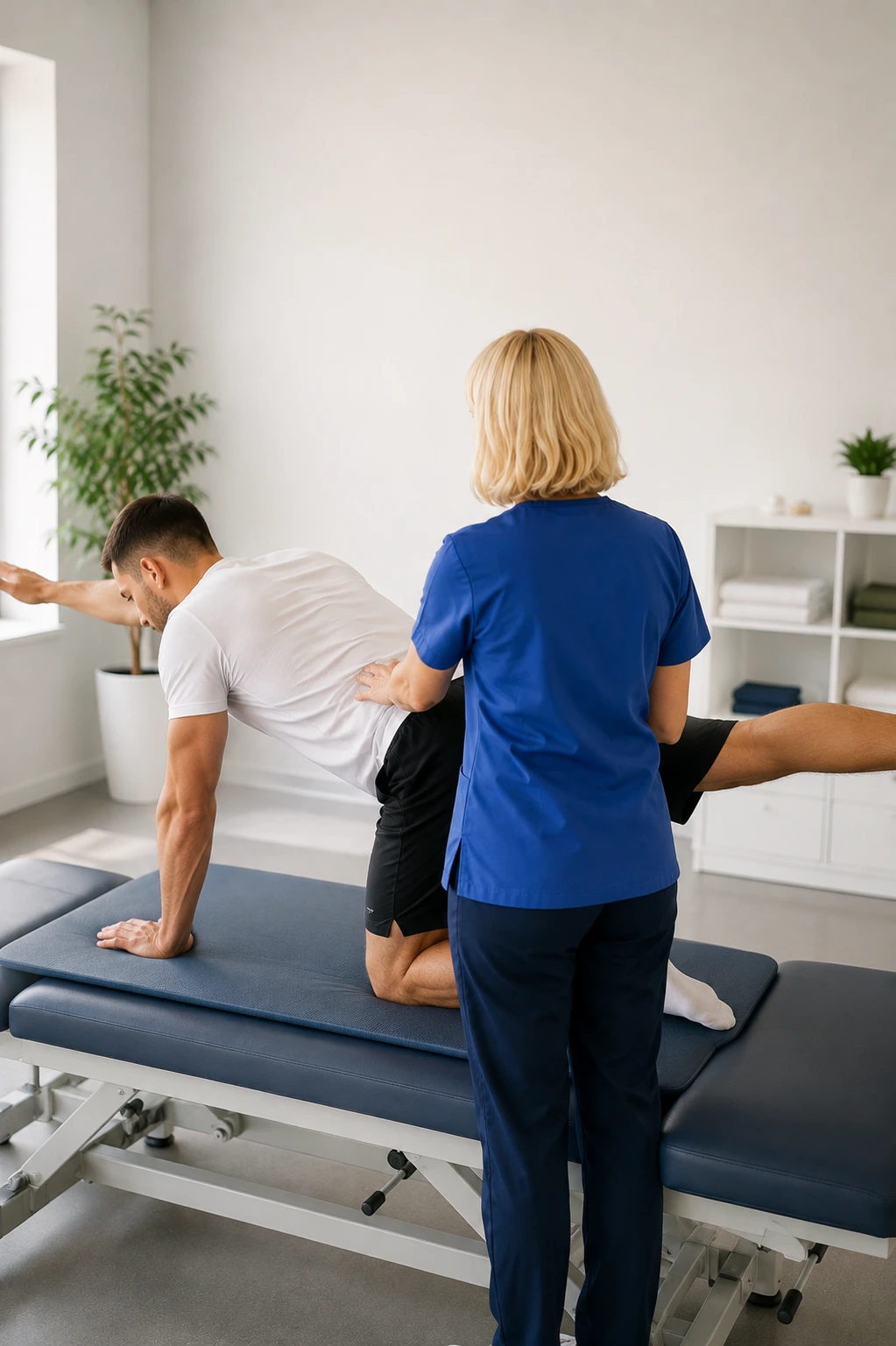
What is it?
A herniated disc can occur in the lower back or neck
Between the vertebrae are intervertebral discs, which help absorb load and allow the spine to move.
When part of a disc moves beyond its normal position and irritates surrounding structures or nerve roots, it is referred to as a herniated disc.
Common signs
What symptoms can a herniated disc cause?
Symptoms depend on the location of the disc problem and the degree of irritation affecting nearby nerve structures.
Low back pain
Pain or tension in the lower back.
Neck pain
Pain and restricted movement in the neck.
Pain down the leg
Pain that travels from the lower back towards the buttock or leg.
Pain down the arm
Pain that travels from the neck towards the shoulder or arm.
Numbness or tingling
Numbness, tingling, burning or pins-and-needles sensations.
Muscle weakness
Weakness or reduced confidence when using the arm or leg.
Location of the problem
Lumbar and cervical herniated discs
Symptoms vary depending on the area of the spine where the problem is located.
Lumbar herniated disc
It is often associated with low back pain and pain that travels towards the buttock or leg.
- Low back pain
- Pain down the leg
- Numbness or burning
- Sciatic nerve irritation
Cervical herniated disc
It may cause neck pain and symptoms that travel towards the shoulder, arm or fingers.
- Neck pain
- Shoulder pain
- Numbness in the arm
- Tingling in the fingers
Possible causes
Several factors may contribute to the problem
A herniated disc is not always caused by a single event. It may be associated with loading, everyday habits, movement and natural changes in the disc over time.
Prolonged sitting
Lifting with unsuitable technique
Repetitive movements
Reduced strength of stabilizing muscles
Low levels of physical activity
Disc changes over time
Non-surgical treatment
Does a herniated disc always require surgery?
No.
Many cases can be managed conservatively with physiotherapy, controlled exercise and appropriate changes to daily activity.
If the assessment identifies signs that require more specialized medical evaluation, we recommend consultation with the appropriate specialist.
Treatment at Treka Fizio
How is a herniated disc treated?
Treatment is tailored to your symptoms, the location of the problem and how it affects your daily life.
Assessment
We assess pain, movement, strength and any symptoms that travel into the leg or arm.
Manual therapy
We work to reduce tension and improve mobility in the affected area.
Controlled exercise
We use tailored exercises to improve strength, movement control and confidence.
Return to activity
We help you gradually return to work, walking, physical activity and everyday life.
Treatment goal
More than temporary pain relief
The goal is to improve function, increase confidence in movement and help you gradually return to your activities.
During treatment, you also learn how to manage load and reduce the likelihood of symptoms returning.
Why Treka Fizio?
Treatment tailored to your symptoms
Treatment is provided under the clinical direction of Dr. Klejda Tani, PhD, and is adapted to each patient’s condition, symptoms and progress.
Learn more about usDetailed assessment
Individual treatment
Manual therapy and exercise
Management of nerve-related symptoms
Home exercise program
When should you seek help?
Do not wait for symptoms to limit you further
Book an assessment if pain travels into your leg or arm, is accompanied by numbness, tingling or weakness, or is affecting your work, sleep or everyday activities.
Book an AppointmentWe assess your symptoms and how they are affecting you.
Individual treatment me fizioterapistin.
With greater confidence in everyday activities.
Frequently asked questions
Questions about herniated discs
Can physiotherapy help with a herniated disc? +
In many cases, physiotherapy can help reduce symptoms, improve movement and support a gradual return to activity. Each case should be assessed individually.
Does it always require surgery? +
No. Shumë raste trajtohen pa operacion. Ndërhyrja kirurgjikale merret në konsideratë vetëm në raste të caktuara dhe pas vlerësimit mjekësor.
Should I rest completely? +
Prolonged rest is usually not the solution. Controlled movement and appropriately selected exercises are often more helpful.
Is numbness normal? +
Numbness may be related to irritation of a nerve structure. If it persists, worsens or is accompanied by weakness, it should be professionally assessed.
How many sessions will I need? +
The number of sessions depends on your symptoms, how long the problem has been present, your functional condition and your response to treatment.